Services
Pool Brush and Wall Cleaning
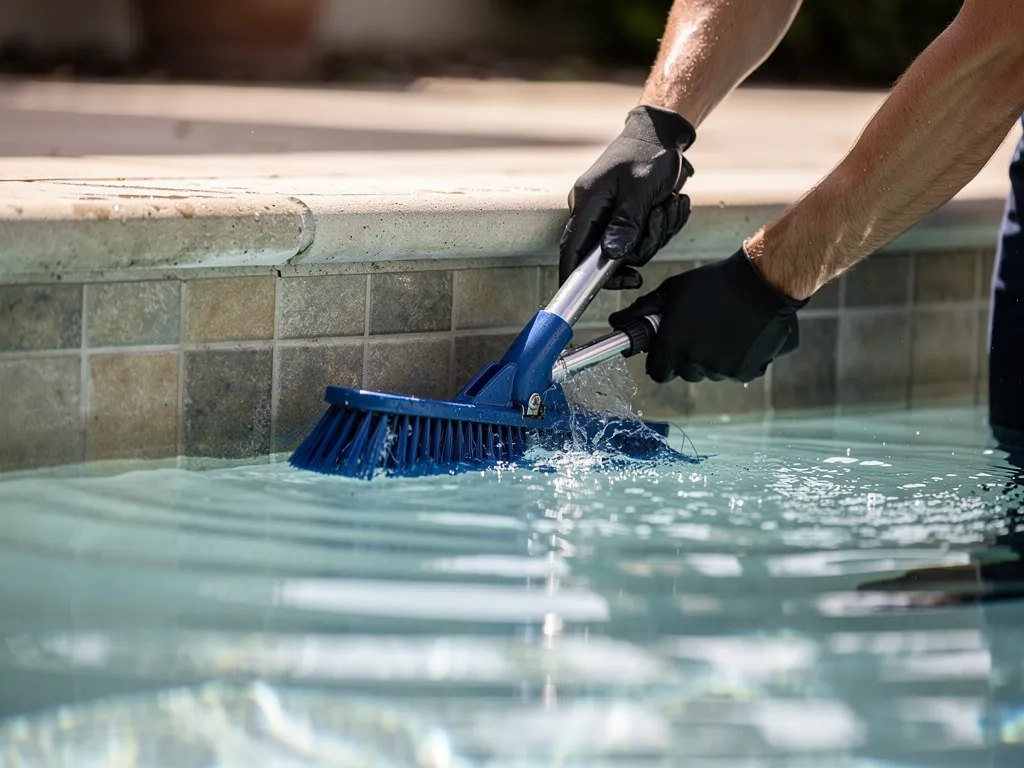
Scrubbing pool walls, floor, and tile surfaces to prevent algae and mineral buildup.
Get a free quote
Need Pool Brush and Wall Cleaning? Let's talk.
Tell us what you need. We come back the same business day.
+18322417071Pool walls, floors, and tile lines take a constant beating from sunlight, chemical exposure, and whatever the water carries in from wind and rain. Even with a well-balanced pool, calcium deposits creep up the tile line, algae spores find their way into rough spots on plaster, and organic debris settles into corners and steps where circulation is weakest. Brushing isn't a cosmetic extra. It's the mechanical work that keeps chemicals effective and keeps small problems from turning into resurfacing jobs.
You'll know brushing has been neglected when you see a fuzzy green or black tint on the walls, a rough or slippery feel on the plaster underfoot, or a white crust forming along the waterline tile. Cloudy water that won't clear up despite normal chemical dosing is another sign, since algae and buildup on surfaces can outpace what the filter and sanitizer can handle on their own. Pools that sit unused for stretches, or that get heavy bather load in summer, tend to need more frequent attention to walls and tile than a pool that's used lightly and covered often.
What the work involves
A proper brushing job starts at the waterline tile, using a tile brush or nylon pad suited to the tile's finish to break up scale and body oil residue without scratching grout or glazing. From there we move to the walls, working top to bottom in overlapping strokes so no section gets missed, using a brush head matched to the pool's surface, stiffer nylon for plaster and gunite, softer bristles for vinyl or fiberglass to avoid scuffing. The floor gets the same treatment, paying extra attention to corners, steps, and behind ladders where debris settles and circulation is poor. Once brushing loosens algae and buildup into the water column, we run the filtration system long enough to capture it, and in some cases a manual vacuum pass is needed to pull heavier debris straight off the bottom rather than waiting on the filter.
What affects timing and results
How long a brushing visit takes depends on pool size, surface type, and how long it's been since the last cleaning. A pool on a consistent weekly plan usually just needs routine maintenance brushing, quick and preventive. A pool that's been neglected for a month or two, especially one with visible algae growth, takes longer because the buildup is more established and may need repeat brushing over a couple of visits alongside a stepped-up chemical treatment to fully clear it. Surface material matters too. Plaster and gunite pools tend to accumulate more mineral scale and rough spots that trap algae, while vinyl and fiberglass are smoother but more prone to scuffing if the wrong brush is used.
On the day of service, expect us to check water chemistry first, since brushing algae into water with poor sanitizer levels just lets it regrow. We brush the full pool surface, run or check the filter cycle, and do a visual walkthrough afterward to confirm walls and tile look clear. If we spot problem areas that need more than routine brushing, like heavy scale buildup or stubborn algae rooted in rough plaster, we'll flag it so a plan can be made rather than leaving it half-addressed.
A common mistake pool owners make is brushing only the visible waterline and skipping the walls and floor, or using a generic brush that's too soft to do anything on plaster, or too stiff and abrasive on vinyl. Another mistake is brushing without following up with adequate filtration or vacuuming, which just leaves the loosened debris to resettle. Skipping brushing for weeks at a time and relying on chemicals alone also tends to backfire, since chemicals work far more effectively on a clean surface.
What sets a thorough job apart is consistency and attention to the areas people don't see when they glance at the pool, the corners, the steps, behind fixtures, and the tile line where scale first forms. We treat brushing as a standing part of every maintenance visit, not an add-on, because it's one of the simplest ways to protect the surface and keep water quality from sliding backward between visits.
- Prevents algae growth before it takes hold
- Protects plaster, gunite, and tile from buildup
- Improves chemical sanitizer effectiveness
- Keeps pool surfaces smooth and safe underfoot
- Reduces risk of costly resurfacing later
- Helps water stay clear between service visits
- Catches early signs of surface wear or scale
How it works
Three steps, no surprises
Check water chemistry
We test the water first so brushing loosens algae and buildup into water that can actually sanitize it effectively.
Brush walls, floor, and tile
Using brushes matched to your pool's surface, we work top to bottom and pay close attention to corners, steps, and the tile line.
Filter or vacuum debris
We run the filtration system or vacuum manually to remove what's been loosened so it doesn't resettle on the surface.
Service areas
Pool Brush and Wall Cleaning near you
We cover the towns below for pool brush and wall cleaning. Each page lists local response times.
Questions
Frequently asked
How often does my pool need to be brushed?
Most pools benefit from brushing at every regular maintenance visit, since buildup and algae spores are constantly forming. Pools with heavy use, direct sunlight exposure, or a history of algae problems may need more frequent attention to the walls and tile.
Will brushing damage my pool's surface?
Not if the right brush is used. We match brush stiffness to your surface type, stiffer nylon for plaster and gunite, softer pads for vinyl and fiberglass, so buildup is removed without scratching or scuffing the material.
Can brushing alone get rid of algae?
Brushing breaks algae loose from the surface, but it needs to be paired with proper filtration or vacuuming and balanced chemicals to actually clear it from the water. On its own, brushing just knocks it into suspension.
Why does my tile line get that white crust?
That's typically calcium scale building up from water evaporation at the waterline. Regular brushing with the right tile brush keeps it from hardening into a thicker layer that's harder to remove later.
Do I need to be home during the cleaning?
No, as long as we have access to the pool area and equipment. Many of our regular maintenance customers aren't home during scheduled visits.
What if my pool has heavy algae already?
Heavily neglected pools sometimes need more than one brushing visit combined with a chemical treatment plan to fully clear the growth. We'll assess it on site and let you know what's needed to get the pool back to normal.
Need Pool Brush and Wall Cleaning? Let's talk.
Tell us about the job and we will come back with a straight answer and a firm price.