Services
Pool Chemical Balancing
Professional testing and adjustment of pool pH, alkalinity, chlorine, and other chemical levels.
Get a free quote
Need Pool Chemical Balancing? Let's talk.
Tell us what you need. We come back the same business day.
+18322417071Pool water can look clear and inviting while still being chemically unbalanced enough to damage equipment, irritate skin and eyes, or breed algae beneath the surface. Chemical balancing is the part of pool maintenance that most owners overlook until something goes wrong, like cloudy water, a persistent chlorine smell, or corroded metal fittings. Regular testing and adjustment keeps the water safe to swim in and protects the plaster, liner, and mechanical parts of the pool from the slow damage that comes from water that's too acidic, too basic, too chlorinated, or not chlorinated enough.
Signs your pool needs attention A few warning signs tell us a pool is due for chemical balancing. Water that looks slightly hazy or has a green tint even after filtering usually points to low sanitizer levels or high pH. A strong chemical odor near the water is often a sign of chloramines, not too much chlorine, which means the water actually needs more free chlorine, not less. Skin irritation, red eyes after swimming, or scaling around the tile line are also indicators that levels have drifted out of range. Pools that sit unused for a week or two, get heavy rain, or have new water added after a top-off almost always need rebalancing.
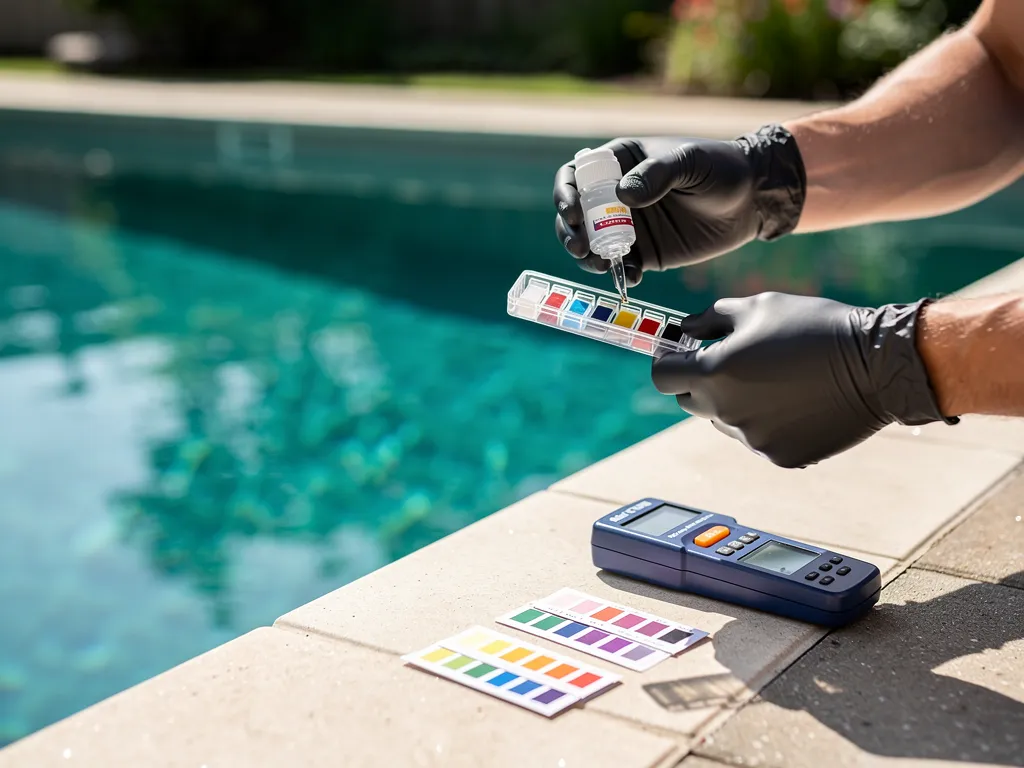
What the service involves Our technicians start by pulling a water sample and running a full test panel that checks free and total chlorine, pH, total alkalinity, calcium hardness, and cyanuric acid. Each of these numbers affects the others, so we don't just look at one reading in isolation. From there we calculate the exact adjustments needed and add the appropriate chemicals in the correct order, usually alkalinity first, then pH, then sanitizer, since adding them out of sequence can cause overcorrection or cloudy water. We also check the pool's stabilizer level, since too much cyanuric acid can lock up chlorine and make it less effective even when the reading looks fine on paper.
After treatment, we run the pump for a set period to circulate the chemicals evenly through the water, then retest before we leave to confirm the levels have moved into the target range. For spa attachments, we test and balance those separately, since spas run at higher temperatures and lose chemical stability faster than the main pool.
What affects timing and results Several things affect how quickly a pool responds to balancing. Pool volume matters, since a larger body of water needs more chemical and more time to fully circulate. Bather load, meaning how often and how many people use the pool, speeds up chlorine demand and can throw off a fresh balance within a day or two. Weather plays a role too. Heavy rain dilutes chemicals and lowers pH, while intense sun burns off chlorine faster through UV exposure. Water that has gone untreated for a long stretch may need a slower, staged approach rather than one large chemical dose, since dumping too much at once can cause its own problems like cloudiness or bleached pool surfaces.
Common mistakes we see A lot of pool owners try to fix chemistry issues by adding more chlorine without checking pH or alkalinity first, which often makes the problem worse instead of better. Others add chemicals in bulk without waiting for previous doses to fully circulate, leading to swings between too high and too low. Skipping cyanuric acid testing is another common oversight, since a pool can show adequate chlorine while that chlorine is barely doing any work because it's bound up by excess stabilizer.
Our approach is to test thoroughly before adding anything, adjust based on the full picture rather than a single number, and verify results before considering the job done. We keep a record of each visit's readings so we can spot patterns over time, like a pool that consistently loses alkalinity or gains hardness, and adjust the maintenance plan accordingly rather than treating every visit as an isolated event.
- Prevents algae growth and cloudy water
- Protects pool surfaces and equipment from corrosion
- Reduces skin and eye irritation for swimmers
- Extends the life of pumps, filters, and liners
- Catches problems before they require costly repairs
- Keeps spa and pool chemistry properly separated
- Consistent testing builds a record of your pool's trends
How it works
Three steps, no surprises
Water Testing
We pull a fresh sample and run a full panel checking chlorine, pH, alkalinity, calcium hardness, and stabilizer levels.
Chemical Adjustment
Based on the readings, we add chemicals in the correct sequence and run the pump to circulate them evenly.
Verification
We retest the water before leaving to confirm levels have moved into the proper range and note results for future visits.
Service areas
Pool Chemical Balancing near you
We cover the towns below for pool chemical balancing. Each page lists local response times.
Questions
Frequently asked
How often does pool water need to be chemically balanced?
Most pools benefit from testing and adjustment on a weekly basis, though pools with heavy use, recent rain, or new water added may need more frequent attention. Our maintenance plans include regular balancing as part of the weekly visit.
Can I test and add chemicals myself between visits?
You can, but adding chemicals without a full test panel can cause more harm than good if levels are already close to correct. If you do test on your own, avoid adding sanitizer or pH adjusters without checking alkalinity first.
Why does my pool still smell like chemicals if chlorine is high?
A strong chemical smell usually means chloramines have built up, which happens when there isn't enough free chlorine to fully break down contaminants. This is fixed by increasing sanitizer levels, not reducing them.
Does rain affect pool chemistry?
Yes, heavy rain dilutes chemical levels and tends to lower pH, so pools often need rebalancing after a storm. We check for this during scheduled visits following significant rainfall.
How is a spa attached to my pool treated differently?
Spas run hotter and cycle through chemicals faster than the main pool, so we test and treat them separately during each visit. This keeps both the pool and spa within their proper ranges.
What happens if chemical levels are left unbalanced for a long time?
Extended imbalance can lead to algae growth, scaling on tile and equipment, corrosion of metal fittings, and cloudy or unsafe water. It also makes the eventual correction more gradual, since large chemical swings need to be handled carefully.
Need Pool Chemical Balancing? Let's talk.
Tell us about the job and we will come back with a straight answer and a firm price.